



In January 2026, one of Africa’s most ambitious clean cooking companies shut down operations. KOKO Networks had raised over $100 million and was backed by a $180 million World Bank guarantee designed to shield investors from losses caused by government actions. It had reached more than 1.5 million households across Kenya with a clean cooking business built to displace charcoal.
KOKO had built the business. What it could not secure was the Kenyan government’s approval to sell the carbon credits its business model depended on. The Letter of Authorisation that Article 6 of the Paris Agreement requires never arrived, and the revenue that would have funded KOKO’s subsidies disappeared with it. In the months that followed, Kenya framed the missed authorisation as a policy choice rather than an infrastructure gap. A signal that its government intended to protect emission reductions for its own climate targets rather than export them at scale.
A carbon credit is, in plain terms, a tradeable certificate. Each one certifies that somewhere in Africa, a tonne of carbon dioxide (CO₂) that would have entered the atmosphere did not, because a forest was protected, a cleaner stove replaced a dirtier one, or a solar plant displaced a diesel generator.
Governments and companies buy them to offset emissions they cannot yet eliminate, either to meet regulatory obligations or to satisfy net-zero commitments made to investors and customers. A credit’s price and legitimacy depend on whether the reduction is real, additional, permanent, and critically, counted only once. That last requirement is why national registries exist.
On August 11, 2026, the Government of Zambia launched a fully operational national carbon registry, joining a small group of African countries that have moved from carbon market ambition into execution But Zambia is doing something different: pairing that infrastructure with a large sovereign-buyer purchase commitment structured under a Carbon Feed-in Premium mechanism, a financing model no other African country has yet used.
What a registry actually does, and why it matters
To understand why Zambia’s launch is consequential, it helps to understand what a national registry actually does. Article 6 of the Paris Agreement allows countries to trade emissions reductions internationally, but only if those reductions are formally authorised, tracked, and adjusted in the host country’s national accounting so they cannot be counted twice.
A national registry is the digital infrastructure that makes all of this possible. Without one, a project developer can generate perfectly legitimate carbon credits and still be unable to sell them, because there is no institutional mechanism to authorise the transaction. That is precisely the gap KOKO fell through, and it is precisely the gap Zambia has just closed.
The registry is already anchored by a signed purchase commitment
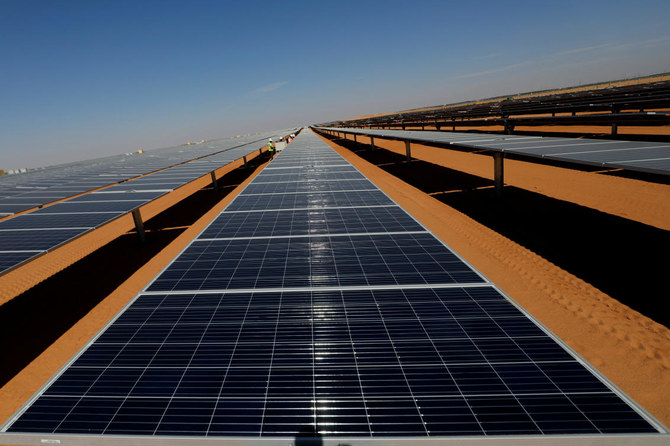
In January 2026, Zambia signed a Mitigation Outcome Purchase Agreement with Norway under the Carbon Feed-in Premium programme, a mechanism designed to trigger up to 300 megawatts of new solar and battery storage capacity in Zambia and reduce up to 3.5 million tonnes of carbon dioxide equivalent over a decade.
The same programme is now drawing local and international power developers into a business model where every tonne of carbon they help avoid is bought by the Norwegian government at a pre-agreed price. That combination, a signed sovereign-buyer agreement, a working national registry to track the credits, and a pipeline of developers ready to build is what Zambia has assembled in a form other African export markets can study.
For a Zambian solar developer, it means a second, guaranteed revenue stream on top of the electricity they sell, one predictable enough that a bank can lend against it. For Norway, it means credits that will hold up under scrutiny.
The private-sector pipeline extends beyond solar. BioCarbon Partners has been running the 1.2-million-hectare Luangwa Community Forests Project since 2014. Pro Green Earth is developing the Barotse Rangelands Restoration Project across an additional 1.2 million hectares in Western Province, with validation of the project design document expected this year. Between them, forestry and rangelands account for more than 2.4 million hectares under active carbon project development.
Africa’s carbon market has moved past the readiness phase. Seven countries have crossed transaction-readiness thresholds, and each is now betting on a different strategy.

National carbon market infrastructure readiness across ten African countries, August 2026, scored across five institutional components
| Country | National carbon registry |
Article 6.2 bilateral agreements |
Enabling legislation |
First transaction completed |
Regional alliance membership |
|---|---|---|---|---|---|
| Zambia | Operational | 4 (Norway, Sweden, Switzerland, Singapore MoU) | In force | Purchase agreement signed (Jan 2026) | Southern Africa |
| Ghana | Operational | 5 acquiring parties, 44 activities | In force | Yes (Jul 2025) | West African Alliance |
| Rwanda | Operational | 4 (Singapore IA, Switzerland, Kuwait, Sweden) | In force | Yes (Gold Standard w/ Article 6 alignment) | East African Alliance |
| Kenya | Operational (Feb 2026) | 4 acquiring parties | In force | Capped at 10Mt through 2030 | East Africa Alliance |
| South Africa | In development | Bilateral talks | Partial (domestic only) | No | None |
| Nigeria | Operational (since 2024) | Emerging | In force | No | West African Alliance |
| Morocco | Segmented* | 4 (Norway, Switzerland, Singapore, S. Korea) | In force | Emerging | None |
| Senegal | Advanced (unveiled at COP30) | 4 acquiring parties | Advanced (near-final) | No | West African Alliance |
| Tanzania | Operational | In development | In force | Authorised (2024, 2026) | East Africa Alliance |
| Zimbabwe | Operational (May 2025) | Emerging | In force | Yes (Oct 2025, Gold Standard w/ CAs) | Southern Africa |
Methodology: Scoring reflects TechCabal Insights synthesis of publicly disclosed status across primary institutional and media sources, informed by the readiness dimensions used by Norton Rose Fulbright and Carbon Pulse in their public analyses. Country-level status is subject to rapid change; readers should verify specific claims against the latest official announcements. Country-level assessments reflect TCI’s synthesis of publicly disclosed status as of August 2026; we welcome corrections from primary sources.
Sources: Government of Zambia (registry launch, August 2026; four bilateral partners); NEMA Kenya (National Carbon Registry launch, February 2026; Rule Book, August 2026); Rwanda Climate Change Portal and Gold Standard (Rwanda registry operational; first Paris Article 6-aligned carbon credit issuance); NDC Partnership and Zimbabwe Carbon Markets Authority (blockchain registry launch, May 2025; Cicada Carbon Gold Standard issuance with corresponding adjustments, October 2025); Ghana Environmental Protection Agency, Carbon Pulse, and KliK Foundation (11,733 ITMOs transferred to Switzerland, July 2025); UNEP Copenhagen Climate Centre (Ghana 44 Article 6.2 activities, July 2026); Fastmarkets and BusinessDay Nigeria (Nigeria Carbon Market Activation Policy, 2025; national registry operational since 2024); GGGI and Argus Media (Morocco-Norway Article 6.2 agreement, May 2026); Morocco World News (Guarantees of Origin registry, June 2026); Article 6 Implementation Partnership (bilateral agreement counts as of June 2026); NCMC Tanzania (national carbon trading registry); UpEnergy / Carbon Herald (Tanzania first Article 6 LOA, April 2024; four Article 6 projects approved, August 2026); Carbon Pulse (Senegal registry unveiled at COP30, November 2025); Eastern Africa Alliance on Carbon Markets and Climate Finance and Southern African Alliance on Carbon Markets and Climate Finance (regional alliance membership); Norton Rose Fulbright, “Opportunities for Article 6 engagement in Africa”; TechCabal Insights analysis.
The continental picture is evolving
Zambia is not moving alone, and this is where the market is being repriced. Ghana operates a live Ghana Carbon Registry under its Environmental Protection Act 2025, has signed five Article 6.2 bilateral agreements underpinning 44 authorised activities, and in July 2025 completed the first-ever ITMO transfer in Africa; 11,733 verified units moved to Switzerland under their bilateral agreement. Access Bank Ghana was authorised as a carbon-credit broker in August 2026, an early sign that a financial intermediation layer is forming around the market. Kenya launched its own National Carbon Registry in February 2026 and has since capped international carbon credit exports at 10 million tonnes through 2030, building infrastructure to restrict transfers rather than expand them. Rwanda, Zimbabwe, Nigeria, and Tanzania have each built registries and legislation of their own on different timelines. Eight southern African countries launched a regional carbon market alliance in April. In West Africa, ECOWAS is validating a regional framework designed to close a $294 billion climate finance gap. What has been a fragmented policy ambition for a decade is beginning to consolidate into functional market infrastructure.
The scale of what this unlocks is significant. The Africa Carbon Markets Initiative projects the continent’s carbon market could scale roughly nineteen-fold by 2030, generating around $6 billion in annual revenue and supporting up to 30 million jobs. Some industry sources project that the market could exceed $50 billion in high-demand scenarios driven by compliance with the Carbon Offsetting and Reduction Scheme for International Aviation (CORSIA) and tightening corporate net-zero commitments. Whether the market reaches the lower or upper end of that range depends almost entirely on whether the institutional infrastructure Zambia has just launched becomes the norm rather than the exception across the continent.
What still has to go right
An operational registry is a precondition for transactions, not a guarantee of them. Four risks sit between the architecture Zambia has built and the market it hopes to convene.
Macroeconomic risk is the first. Zambia defaulted on its sovereign debt in 2020 and completed restructuring only in 2024. Buyers underwriting ten-year credit streams denominated in a volatile kwacha will price that in. Government-to-government agreements with Norway and Sweden partially cushion this; private developers raising commercial finance will not.
Demand-side risk is the second. The Article 6 market is unproven at a commercial scale. The first-ever credit issuance under the new Article 6.4 mechanism was approved in February 2026 for a single clean-cooking project in Myanmar, and as of mid-2026, only 13% of legacy CDM credits requesting transition had been approved. Whether corporate buyers will pay the prices needed to make African projects bankable remains an open question.
Domestic equity is the third. Zambia has a track record of community benefit-sharing disputes in existing REDD+ projects; how carbon revenues reach the chiefdoms whose forests generate them has stalled projects across the continent. The Green Economy and Climate Change Act of 2024 sets rules for benefit-sharing but has not been tested on a large-scale Article 6 transaction under commercial pressure.
Time is the fourth. The registry is now live, but the pipeline it processes has its own clock. The Miombo Woodland Restoration project is not scheduled to issue credits until 2027, and the Carbon Feed-in Premium programme, which closed applications in May 2026, will take months to move from award to verified reductions.
Taken together, these risks do not undo Zambia’s progress. They define what it actually is. What Zambia has done is stake out the clearest African example of the export-oriented model. A large sovereign buyer, a purpose-built financing mechanism, and infrastructure designed to scale transactions rather than restrict them.
What it means and who benefits
For project developers building on carbon revenue models, the era of hoping for authorisation is ending. The African markets that will attract capital and buyers in the next 18 months are the ones that can point to an operational registry, a signed bilateral agreement, and a live sovereign-buyer relationship. Zambia now has this combination in a form purpose-built for export. Morocco, Ghana, Rwanda, and Zimbabwe have their own versions. Kenya has the same infrastructure but has chosen to hold back its exports. Which of these models attracts the most capital over the next 18 months is the question that matters.
For investors and development finance institutions, the question is shifting from which African countries have carbon market potential to which African countries can actually transact. Capital that could be spread across the continent will begin to concentrate in jurisdictions that have crossed the transaction-readiness threshold.
For African policymakers, these countries that have crossed transaction-readiness thresholds provide a working template. The Green Economy and Climate Change Act of 2024, the operational registry, the Norway agreement, and the pipeline of Article 6 projects together form a playbook that other governments can adapt. The countries that move fastest to replicate this architecture will likely attract projects, capital, and credit demand.
Africa’s carbon market is entering its transaction phase, and it is doing so with more than one working model. Zambia is now the clearest test case for the export-oriented approach. Whether that model wins the capital over the next eighteen months will decide whether this launch marks the turning point.