



The story of women in Africa’s tech ecosystem is usually told as a deficit, from lack of funding to lack of representation, access, and digital skills.
Although this story is true, it only tells part of the story of women’s building prowess. Long before venture capital in Africa, women were already building at scale, evident in the high rate of women’s participation in entrepreneurship on the continent.
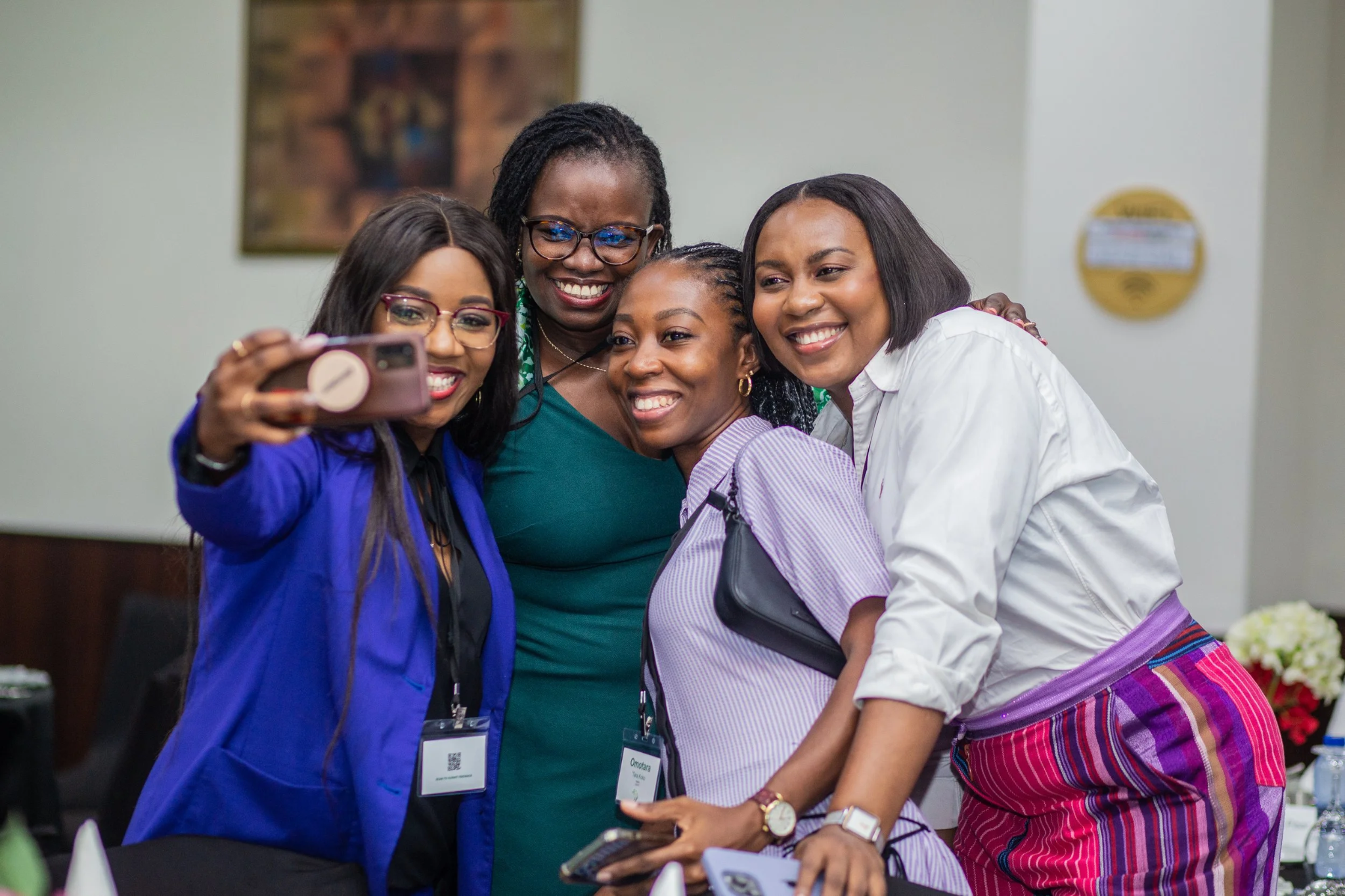
At this year’s IWD event – Beyond Access: Building the Next Wave for Women Founders in Africa – we decided to look beyond these challenges and discuss what women are building in the tech ecosystem
It asks: What are African women actually building? Who are they building it for? And what happens to the people and communities around them when they do? The answers are more expansive and more urgent than just the funding headlines we’re used to.
A builder’s instinct, taken digital
African women generate an estimated $250–$300 billion in economic value every year. That is 12–14% of the entire continent’s GDP, produced by women who are, by every global measure, the world’s most active entrepreneurs. More than one in four African women is starting or running a business. In non-agricultural sectors, women account for 58% of the self-employed.
This is not new. African women have always been builders, and what is new is that the economies they operate in are digitalising rapidly, and the women who built the informal markets are now building the platforms.
The Digital Baobabs report tracks what happens when that builders’ instinct meets technology. It maps 739 venture-backed startups with at least one female founder, co-founder, or female CEO that raised funding between 2019 and 2025, and asks a deceptively simple question: what are they actually building, and for whom?
What stands out is that women are not building randomly. They are building in fintech, agriculture, and healthcare, the sectors closest to how people on this continent actually live, earn, and survive. They are building where the gap between what exists and what is needed is most visible. Our data shows that Nigeria leads in fintech, Kenya in agritech, South Africa in healthcare, Egypt in retail.
The cascading effect
The most important finding in the Digital Baobabs report is not about the founders. It is about who their work reaches.
Among women-led startups funded between 2023 and 2025, 40.2% serve consumers directly, 19.6% target smallholder farmers, and 16.5% support MSMEs. Together, those three groups are the beating heart of Africa’s informal economy — the traders, the farmers, the micro-entrepreneurs that banks, governments, and mainstream systems have historically treated as too small, too dispersed, or too difficult to serve.
And 69.6% of these startups are directly embedded in informal economic activity. Not adjacent to it, in it.
The Momentum Is Real
The 2025 funding data added a new chapter to this story. Funding to startups with at least one female founder grew 81% in a single year, from $152 million in 2024 to $275 million in 2025. That is the fastest year-on-year growth in the data, signifying growth in investor confidence.
The structural gaps remain. Female-only founding teams still account for less than 1% of total startup funding, and the drop-off at Series A is steep as women-led ventures represent 11.78% of pre-seed deals and 10.83% of seed deals, but just 2.23% at Series A.
However, we see these numbers not as a ceiling, but as a baseline. The direction of travel is right. The pace is what the ecosystem now has the power to change.
What the conversation made clear
At the report launch during TC Live IWD 2026, the panel pushed the conversation further.
Ire Aderinokun, angel investor and advisor, reframed the problem: “The funding gap is a downstream problem. Society in Africa is still set up in a way that it is harder for women to be brought to the table. The real issue is the pipeline; what happens before women even get to the table.”
Peace Itimi, founder of Rivva, highlighted a quieter barrier: “Women tend to overthink before they start. That hesitation costs us.” And Chinazom Arinze, Founder, Autogirl brought it back to execution, building in spaces not designed with women in mind, and doing it anyway.
It is a dynamic that the report data reflects in a quieter way. Grants account for 36% of funding for female-only founded startups, compared with 13% for male-only teams. Women are finding the non-dilutive pathways and working them harder, because the equity pathways come with doors that are harder to open from the outside.
From insight to action
One of the clearest gaps the report identifies is structural: Support systems exist for women at the beginning of their journey, and for those who have already started. But the middle is underserved.
That gap is what the TC Battlefield Women Mentorship Programme 2026 is designed to address. The programme is a 6-week structured mentorship experience for women in middle management who have not yet founded a tech-enabled business. Participants move from idea to a structured business concept, learning to design models, build MVPs with no-code tools, and understand how investors think.
The baobab tree here is used as a metaphor to signify resilience and multi-functionality. However, a baobab does not grow in isolation. Its roots need favourable soil conditions, including water, nutrients, and structural support that enable deep growth. Women are already building. It’s now a matter of whether the ecosystem can meet them where they are.
The Digital Baobabs report is now available. Download here
Applications for the TC Battlefield Women Mentorship Programme 2026 are open. See details here