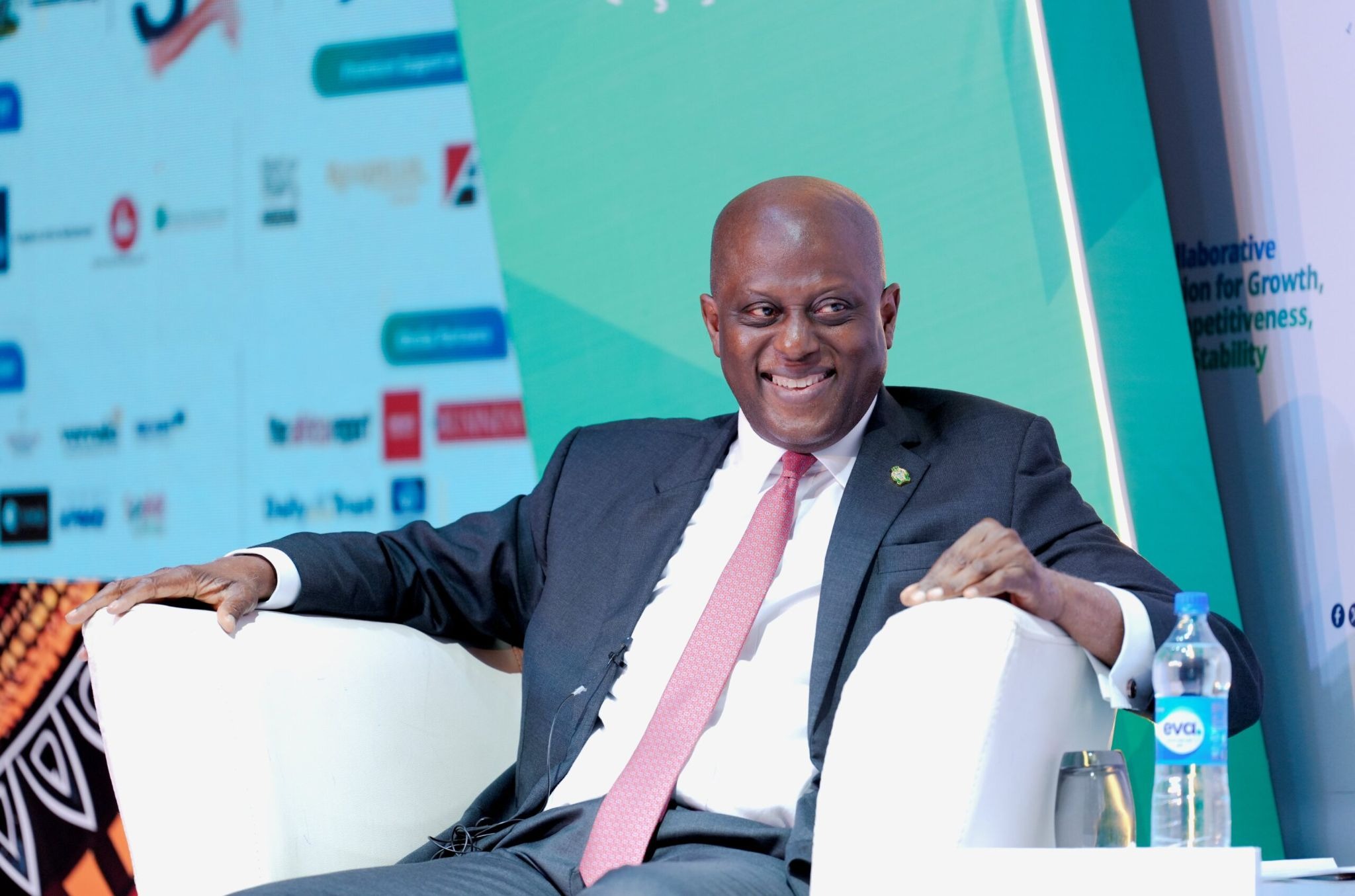



At the launch of TechCabal Insights’ State of Tech in Africa report in January 2026, one speaker offered a measured assessment of where Africa stood with regard to AI funding and whether it could catch up with the rest of the world. The continent, he said, was ready for applied AI rather than frontier AI.
“The kinds of AI companies you’re going to see winning in 2026 in Africa are the guys using AI to reduce operational problems and time lags by 30%,” he said. His preferred examples were credit underwriting and healthcare triage, not generative chat interfaces.
It is a reasonable position. And the funding data, prima facie, seems to support it. In Q2 2025, Crunchbase reported that of the $47 billion raised globally in AI, only $14 million reached Africa across five deals, a rounding error of 0.02% of the total. For an AI entrepreneur in need of capital, that figure is not designed to lift the spirits.
Nevertheless, there’s a different approach to the conversation that may require us to look beyond the surface.
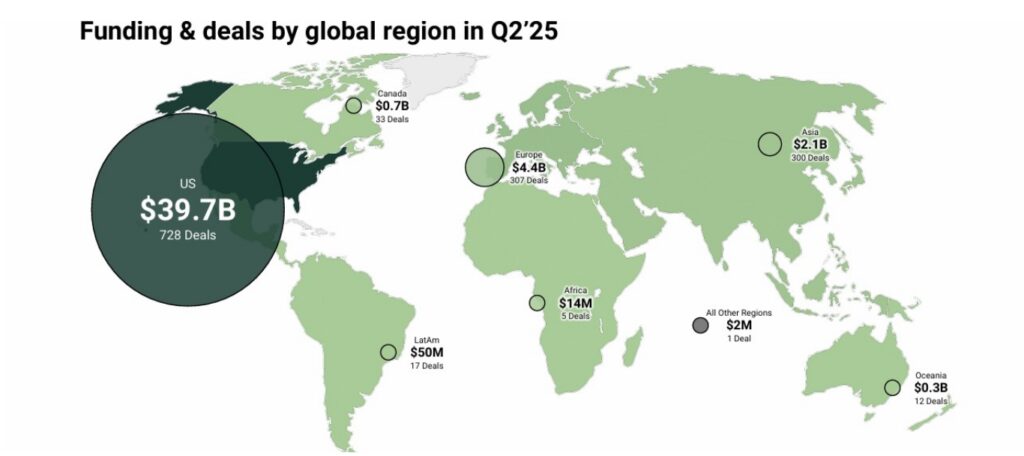
[Source / Crunchbase]
The classification problem
To begin, what is an AI startup? TechCabal Insights applies a working definition calibrated to the African context: an AI startup is a company in which AI is not merely a feature but the primary mechanism through which the business creates and delivers value, whether through predictive modelling, intelligent automation, or data-driven decision tools built on locally relevant datasets.
Another, paraphrased from Springer, describes it based on the value proposition—primary AI technology, data type, data source, and hardware provision—as a newly formed company that embeds AI at the core of its products, services, or business model. Unlike traditional startups that may use AI as a supplementary tool, AI startups fundamentally rely on AI for value creation, usually by leveraging technologies such as machine learning, natural language processing (NLP), and computer vision to solve complex problems, automate tasks, or generate insights.
ALSO READ: 23 startups laying the groundwork for Africa’s AI growth
What comes to mind, based on this definition, are research-driven frontier AI labs like OpenAI, Anthropic, xAI, and the like, known for their widespread use in chat interfaces and generative AI, among other things. All based in the US, the country accounted for 79% of global AI funding in 2025. However, not all startups employ generative AI.
An AfriLabs report found that, as of 2024, over 2,400 AI companies were operating across Africa, of which 41% were startups. Altogether, they have collectively raised approximately $2.02 billion.
These figures rarely surface in global funding narratives. The reason is not that the companies don’t qualify, but that they are misclassified. These startups routinely end up in categories like “fintech” or “healthtech,” which obscures their AI identity entirely.
The classification problem is not the only issue. Africa’s AI ecosystem is oriented towards application, not research. It does not require large sums to build large language models. It requires smaller ones, niche, resource-light, and built for local relevance.
Sometimes, it may even be how the startups pitch themselves to get a foot in the door, so to speak. These factors, combined, create a real possibility that several budding African AI startups could get overlooked in the global funding narrative.
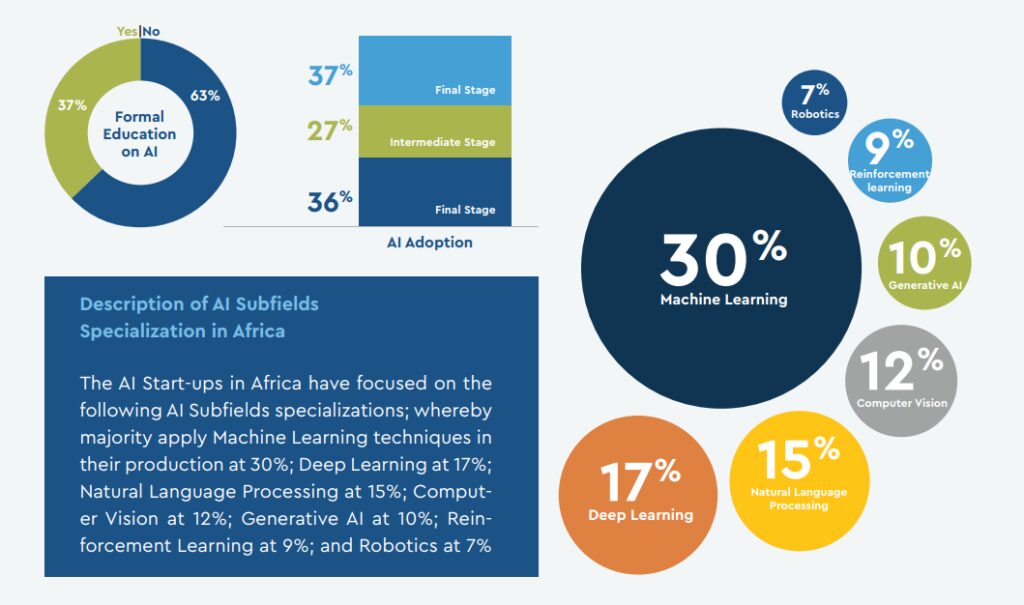
[Description of AI specialisation in Africa / Afrilabs]
For instance, Kera Health, which was among the startups Crunchbase covered in Q2 2025, raised $10 million of the total $14 million on record. The company describes itself as an “AI-powered platform connecting healthcare providers and communities for healthier lives in Africa and beyond.” When news of its raise was reported elsewhere, it was described as a health tech platform.
TechCabal also identified African AI startups that raised in the same window, but the data omitted them. Infinilink, the Cairo-based semiconductor startup, raised $10 million. Cerebrium, the South African serverless AI infrastructure platform, raised $8.5 million. Gaps like these could weaken the cause for investing in African AI.
The real constraints
Acknowledging the undercounting is not the same as dismissing the underlying challenges. Conflating the two would be misleading. As TechCabal Insights has repeatedly documented, only 5% of Africa’s AI talent has access to the computational power needed for meaningful research. The continent also accounts for less than 1% of global data centre capacity.
According to TLP Advisory, a Nigerian law consultancy, the structural barriers are clear: illiquidity, currency mismatches between dollar fundraising and local-currency earnings, and a near-absent IPO pathway. Together, they push Nigerian founders away from the Nigerian Stock Exchange and towards alternative capital sources. This pattern is evident across Africa.
InstaDeep is the clearest illustration of this reality. The Tunisian startup trained large language models capable of predicting dangerous COVID-19 variants before they spread. In 2023, BioNTech acquired it for $682 million, the largest acquisition in Africa’s tech history. Yet, this has proven to be an outlier.
Its CEO, Karim Beguir, later acknowledged that the company made only a few thousand dollars in local sales due to “little appetite” for his product and that raising its $100 million Series B in Tunisia had been structurally impossible, requiring a relocation to London. The talent was globally competitive. The infrastructure to support it was not in place.
Where things stand
Building an AI startup in Africa in 2026 means navigating three compounding disadvantages. Infrastructure remains genuinely insufficient. Capital markets are not calibrated to recognise what you’re building. And the information environment is so thin that data on your own sector may not even capture your existence.
That picture is incomplete without the other side. African tech raised $3.42 billion across 502 deals in 2025, the strongest year since the 2022 peak. Infinilink, before its acquisition by GlobalFoundries in November 2025 at a reported 4x return, was building silicon-photonics chiplets for AI data centres. Cassava Technologies, in partnership with Nvidia, is developing what would be Africa’s first AI factory in South Africa.
The AI activity is clearly real and growing. The honest position, then, is neither to wave away the structural constraints nor to let them define the whole story. Africa’s AI ecosystem is more substantial than global benchmarks suggest, but also more constrained than its most optimistic champions would care to admit.
Getting the balance right about where things stand could shape what investors fund, what policymakers and regulators uphold, and what founders truly believe is possible.
Get informed about African tech and where it is headed. Download the State of Tech in Africa 2025: Year in Review Report.