

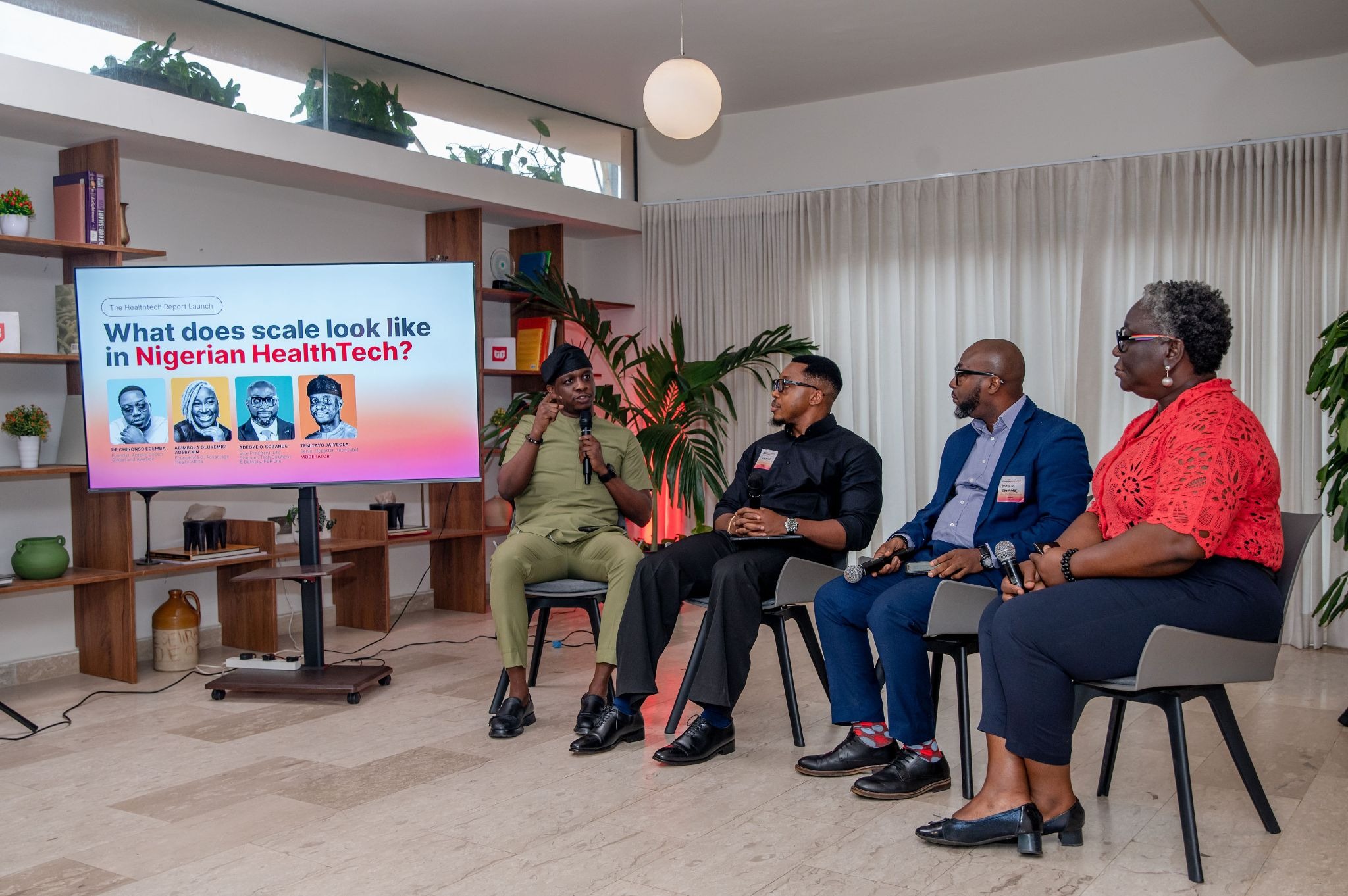

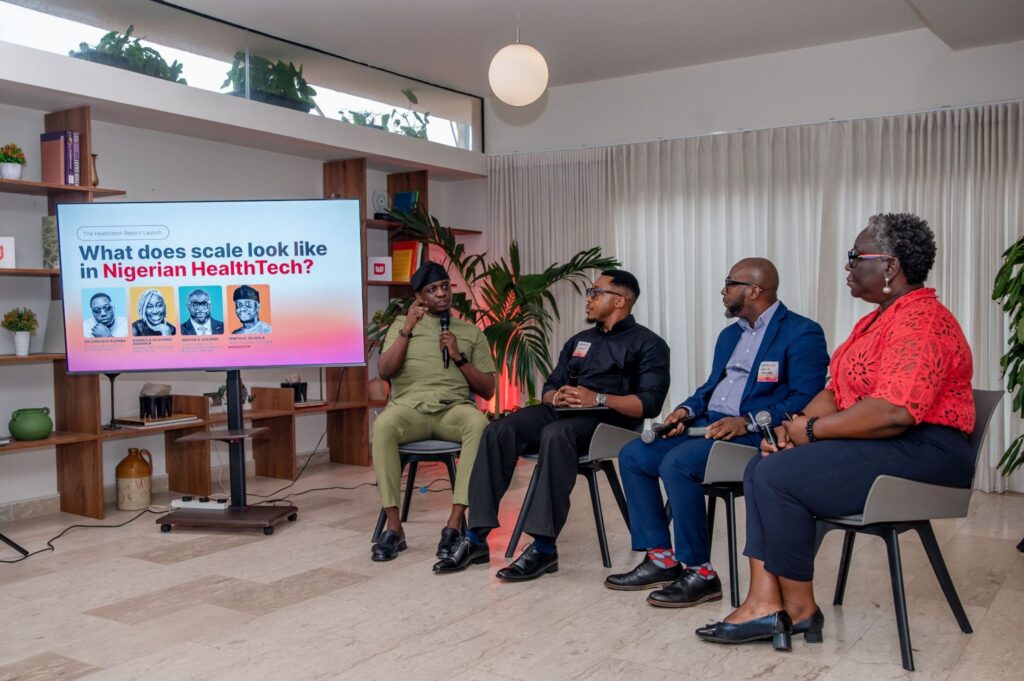
On Friday, May 22, 2026, TechCabal Insights launched its State of Healthtech in Nigeria 2026 Report in Lagos. The event opened with a data presentation by Associate Consultant Adedayo Ojo, before a panel discussion moderated by Temitayo Jaiyeola, Senior Reporter at TechCabal. Joining him on the panel were Dr Chinonso Egemba, popularly known as Aproko Doctor and founder of Aproko Doctor Global and Awadoc; Abimbola Adebakin, founder and CEO of Advantage Health Africa; and Adeoye Sobande, Vice President, Life Sciences Tech Solutions and Delivery.
The conversation covered funding, adoption, regulation, and what it actually takes to build healthtech beyond Lagos. A central focus of the discussion was how Nigeria, with its reported 220 million inhabitants and more healthtech startups than ever, still struggles to get people to use the products being built for them.
The right kind of capital
The panel opened on the question of what kind of funding Nigerian healthtech needs. The short answer from the panellists: not VC, at least not yet.
Abimbola Adebakin drew a comparison to fintech’s early days, arguing that healthtech today is still at the stage of building foundational infrastructure — aggregating pharmacies, connecting HMOs, and creating transparency in supply chains. Venture capital, which demands fast growth and large numbers, is not well suited to that kind of work.
“What I would look for is impact funding that is patient, that understands that there is a dig that has to happen first before we then have rapid growth,” she said.
Adeoye Sobande agreed and sketched out a more realistic progression: impact and grant funding first, then VC once revenue models become predictable, and eventually debt financing and IPOs. He noted that the sector has a long way to go before the numbers VC investors want to see are realistic. The infrastructure those numbers depend on is still being built.
Adoption is lagging, and trust is why
The report’s data showed that adoption of healthtech solutions has not kept pace with the infrastructure that has been built. Jaiyeola asked Dr Egemba why.
His answer was trust and behaviour. People default to what is familiar, especially when they are unwell, and most Nigerians have not yet learned to trust digital health solutions over the options they already know.
“We can have as many health tech apps and digital solutions, and the person who needs healthcare will most likely still wait in front of his compound for the woman selling agbo at home, not because your solution is bad, but because he trusts that solution more than yours,” he said.
Dr Egemba pointed to findings from the report: a peer-to-peer health campaign in Kaduna saw adoption jump noticeably after incorporating a human element. The technology was already there. What changed was how people were reached.
His argument was that trust-building and infrastructure-building need to happen simultaneously, not in sequence. Founders need to meet users where they are rather than assuming that a well-designed app will change behaviour on its own.
Startups or features?
Jaiyeola posed a direct question to the panel: Should healthtech solutions be standalone startups, or would they be more effective as features inside platforms that already have users?
Adebakin argued that both can work, but that many founders can get better results by testing a product and finding a home for it within an existing platform rather than building an organisation around it. She pointed to healthtech products beginning to find traction by embedding within fintech platforms as an example of what that can look like.
Sobande pushed on the underlying commercial question. He asked how many people in the room had a healthcare app subscription, and got one hand. He then asked about general app subscriptions and got many more. “Are we building products that customers are willing to pay for?” he asked. “The hard work is identifying who is going to pay for it — whether that is the user, a payer, or a DFI.”
What the government needs to do
Jaiyeola steered the conversation toward the government, asking the panellists to name one thing that needed to change, setting aside funding.
Sobande called for a clear regulatory framework that enables a healthcare information exchange, something every actor in the ecosystem, from payers to innovators, can agree to.
Adebakin drew on her experience helping to instigate Nigeria’s first online pharmacy regulation. Her advice to the government was to start by admitting what they do not know, then create deliberate spaces where the government, the private sector, and development partners can study the problem together before reaching for solutions borrowed from elsewhere.
“You cannot use the same lenses that have been used for years to stimulate the innovation you need here,” she said.
Dr Egemba made the point that regulation is only part of the picture. The government also needs to shape the environment so that the behaviours healthtech workers are trying to encourage become easier. “No matter how many ‘reduce your salt’ campaigns Nigeria runs, so long as I go to a restaurant and there is a salt shaker on the table, I am going to add salt to my food.”
Building beyond Lagos
The closing segment addressed a question the sector tends to avoid: what needs to happen for healthtech innovation to reach Nigeria outside of Lagos?
Adebakin offered a concrete answer from experience. Advantage Health Africa became, as she described, the only online pharmacy serving all 36 states and the FCT, a milestone reached in September 2024, eight years after launching. The approach was to build a pan-Nigerian pharmacy network from the start and to work with what already existed, including NIPOST, which became a delivery partner after she made a direct case for why it mattered.
She advised healthtech startups to “look for what exists” and work within those constraints, rather than the more costly option of creating everything from scratch.
Sobande noted that founders need to design for the realities of Nigerians: low connectivity, irregular power, and lower income levels. Many startups pilot in Lagos, show early traction, then flatten out because they never really built for anywhere else.
Dr Egemba was direct about what makes this hard: reaching underserved markets — a feat that isn’t commercially viable without grants or patient capital. “You cannot say you are building a health tech solution, and all your customers come from Lagos. You have not built for the nation.”
The State of Healthtech in Nigeria 2026 Report has the data behind these conversations, from funding trends and adoption rates to the specific interventions showing early results. Whether you are building, investing, or working in policy, it is worth a read. Download it here.